

Cultured Dextrose Benefits:
- Flexible range for broad-spectrum antimicrobial protection
- Effective post-inactivation barrier for Listeria monocytogenes
- Natural, label-friendly solution
- Cost-effective drying system for ease of use
- Neutral or positive flavor impact on the final product
Manufacturers of ready-to-eat (RTE) foods, meat products, dips, and sauces now have natural food protection alternatives that rival traditional chemical preservatives. Cultured Dextrose LAB30 offers a flexible, highly effective food protection solution that provides broad-spectrum microbial protection. Manufacturers are now successfully expanding consumer demand for more natural foods without sacrificing shelf life, which is crucial to their bottom line.
Yotabio Cultured Dextrose LAB30, a natural fermentation product of glucose, exhibits antimicrobial properties that extend the shelf life and enhance the quality of refrigerated dips and prepared foods, including meat-based deli salad dressings and side dishes—a market segment that has seen consistent and steady growth in recent years. Driven by growing consumer interest in more "natural" and label-friendly foods, manufacturers in these sectors are seeking natural food protection solutions to replace the synthetic chemicals they currently use.
Yotabio Cultured Dextrose LAB30 provides effective broad-spectrum protection across a variety of prepared foods. LAB30 is particularly effective against Gram-positive spoilage bacteria, such as lactic acid bacteria (LAB) and Listeria monocytogenes (a Gram-positive foodborne pathogen). LAB spoil foods by producing gas and acid, leading to off-flavors and textural changes. L. monocytogenes has been implicated in numerous recalls of ready-to-eat (RTE) and other prepared foods. LAB30 also helps control yeasts, molds, and Gram-negative bacteria and has been shown to be effective against Salmonella, a Gram-negative bacterium, in some applications.
Deli Salad Dressings
Even at relatively high refrigerated temperatures of 10°C (50°F), LAB30 effectively controls the growth of Listeria monocytogenes in prepared salad dressings, such as potato salad, coleslaw, and chicken salad. In a challenge test of chicken salad at pH 4.6, LAB30 at a concentration of 1.5% rapidly reduced the number of Listeria monocytogenes within the first 24 hours and inhibited its growth throughout the shelf life.
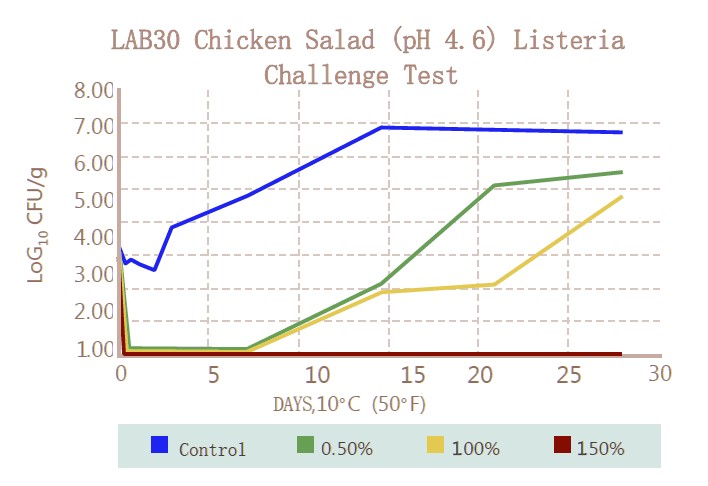
Lower concentrations of LAB30 achieved equivalent efficacy in potato salad and coleslaw. LAB30 also demonstrated effective delaying of LAB growth, thereby helping to extend the shelf life of deli salad dressings. In potato salad and coleslaw, all three concentrations tested controlled and slowed the growth of spoilage LAB, effectively controlling these microorganisms throughout the test period, even when stored at the demanding refrigerated temperature of 10°C (50°F).
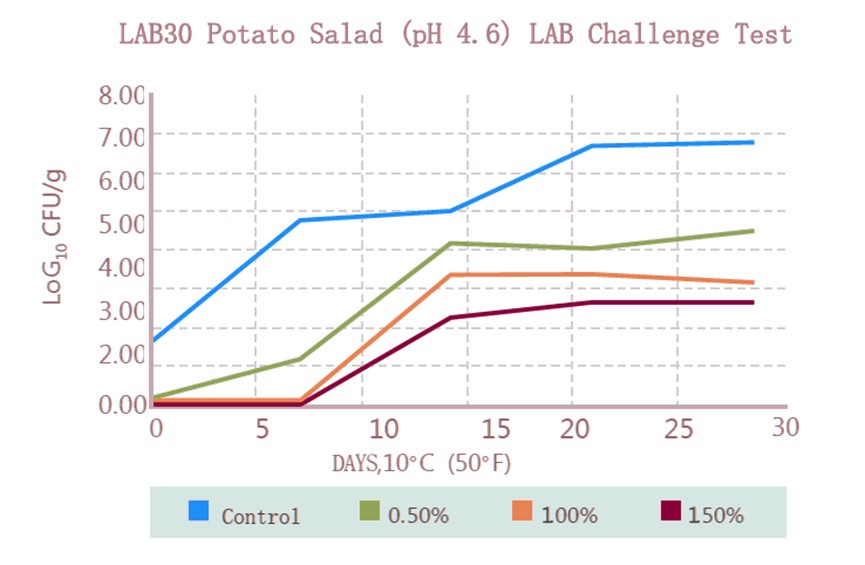
By controlling the growth of spoilage microorganisms and foodborne pathogens, Cultured Dextrose LAB30 effectively protects refrigerated foods such as dips, dressings, and foods like potato salad and chicken salad. It is also approved for use in marinated or water-injected raw meat and poultry products to extend shelf life and improve safety without compromising flavor. Under GMP production conditions, LAB30, combined with other processing barriers, can help manufacturers capture a wider market with naturally high-quality, safer products.